Psychology · Organizations · Artificial intelligence
For 20 years I studied how people talk to each other at work. Now I study how they talk to machines.
I write about the psychological costs and benefits of working with AI: technostress, trust in algorithms, and what organizations can do so that technology doesn’t outrun people. I start from research and test it in my practice as a Chief of Staff.

The blog’s AI assistant
Ask about technostress, AI at work and change communication
You can write in any language. The assistant answers from Magda’s essays, archive and notes, always with sources. It is not Magda, but an AI assistant. Professional topics only.
PhD: the psychological aspects of employees’ collaboration with AI. Now: a study of technostress and generative AI at SWPS University.
See research progress →One path, five lines
How this transformation was built
Each line is a theme that runs through my writing since 2013. A dashed line marks a theme in its early form, a solid one a theme I worked on in earnest. Towards the end they all converge on one question: what technology does to people at work.
essaydraftarchive pieceHover over a point to see the title. Click to read.
Latest pieces, where the lines converge
Communication
How people at work understand each other
Operations
How strategy turns into execution
Transformation
How to lead people through change
Technology
What technology changes in conversation and knowledge
Technostress
What technology does to people at work
- 2026The Hidden Cost of Digital Acceleration. What research tells us about technostress in the AI eraessay
- 2026Your people aren't immune to technology. But your organization may be putting them off itessay
- 2021Why have we fallen in love with podcasts? 8 steps to create your own broadcastarchive
- 2021Leaders in times of pandemicarchive
- 2020Pandemic: A lesson in communication like no other before itarchive
- 2020Engaged communication: the potential risks and rewards of involving your brand in the communication of socially relevant topicsarchive
- 2020The reports of the blog’s death are greatly exaggeratedarchive
- 2019Humor in communication. How to make customers laugh without losing credibilityarchive
- 2019Is Corporate Social Responsibility (CSR) a ruse?archive
- 2019Eight fundamental mistakes to avoid in PRarchive
- 2019The future of PR. Technology teaches people to speak anewarchive
- 2019Leadership and communication: communicate or be out!archive
- 2019Image and story. 2018 content heroesarchive
- 2019A 7-point summary of the year 2018 in the world of communicationarchive
- 2019Fake news. Fighting for honest informationarchive
- 2018How to use informal employee relationships for communication?archive
- 2018Corporate PR: fast-lane communication in 7 questionsarchive
- 2018Design thinking. The art of employee (self)engagementarchive
- 20188 ways to improve internal communication strategiesarchive
- 2018The digital revolution needs a good narrativearchive
- 2018Everything you can expect from internal communication in 2018archive
- 2018HR trends 2018 — a lecture at Kozminski University's Employer Branding postgraduate studiesarchive
- 2017How I teach Internal Communication to Employer Branding managers at Kozminski Universityarchive
- 2017I took part in Vital Voices Global Mentoring Walk 2017archive
- 2017Formal and informal communication (e-book “Internal communication in theory and practice”)archive
- 2016Writing for corporate internal communicationarchive
- 2016Internal communication in 2016archive
- 2015Where to place internal communication function in the company?archive
- 2015Barriers in internal communication cascade during change periodarchive
- 2015Why should you bet on Employer Branding?archive
- 2015“Chauffeur knowledge” in the organizationarchive
- 2015How to control internal communication?archive
- 2015When there is no time for a revolution in internal communicationarchive
- 2014The effectiveness of concise communicationarchive
- 2013Joining the Employer Branding Stars jury for the first timearchive
Technostress in numbers
Four numbers I start conversations with leaders from
Topic map
How the pieces connect
Large circles are topics, small dots are pieces: blue are essays, hollow are drafts, grey are archive pieces. Hover over a topic to highlight its pieces and neighbouring topics. Hover over a dot to see its topics and related pieces; click to read it.
Evidence-based essays
All essays →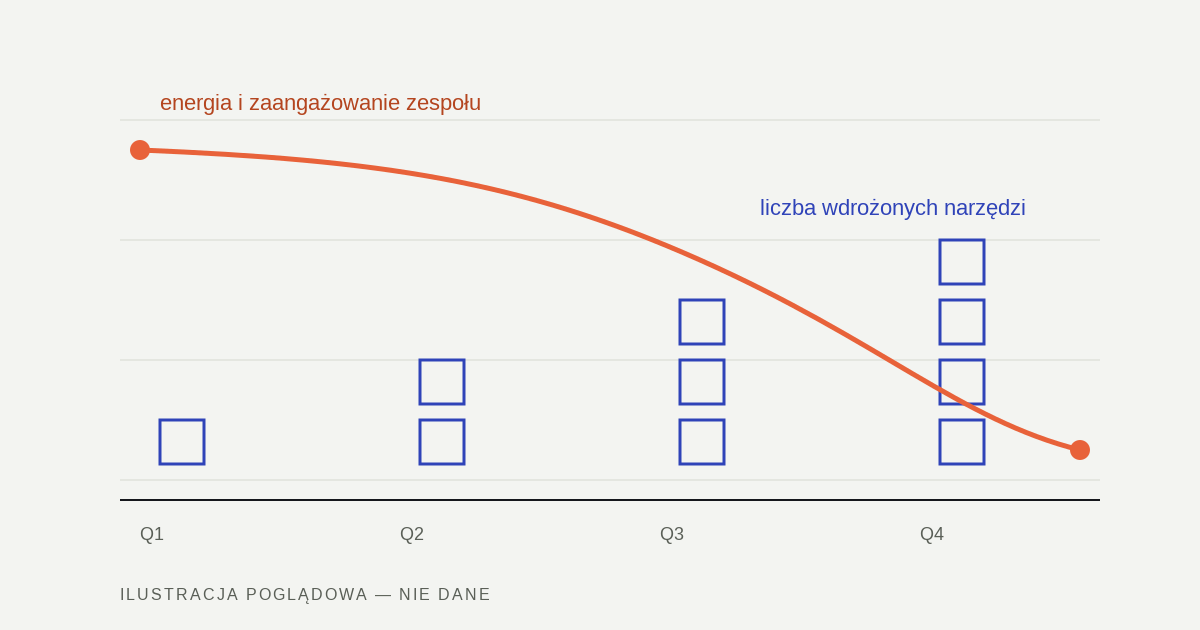 Practice · 5 minYour people aren't immune to technology. But your organization may be putting them off itA rollout can look like a success on every metric, and still leave teams burnt out six months later. Usually because nobody measured technostress.Read the essay →
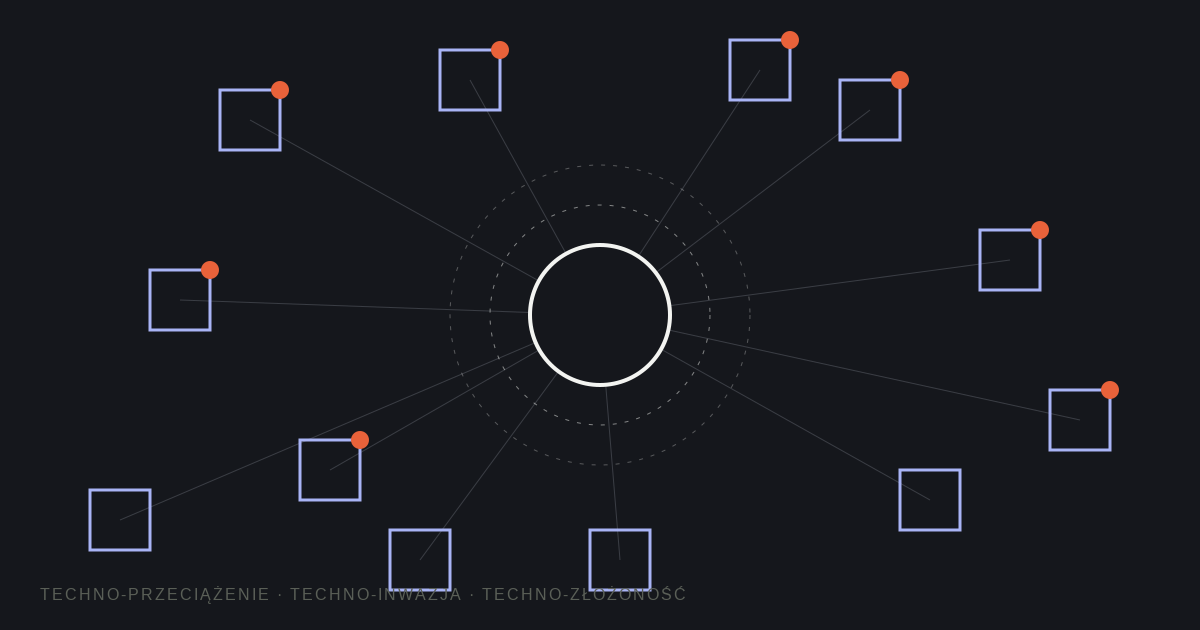 Research review · 8 minThe Hidden Cost of Digital Acceleration. What research tells us about technostress in the AI eraTools designed to make work easier increasingly wear people out. Technostress research explains why, and generative AI adds a paradox: the same technology can both raise and reduce stress.
The thread was there from the start
Each new essay has an ancestor in the archive. The same questions, ten years later.
→ Your people aren't immune to technology. But your organization may be putting them off itThen · 2018 → Now · 2026The digital revolution needs a good narrative
→ The Hidden Cost of Digital Acceleration. What research tells us about technostress in the AI eraThen · 2018 → Now · 2026The digital revolution needs a good narrative
→ The Hidden Cost of Digital Acceleration. What research tells us about technostress in the AI era
Self-check · 3 minutes
How much technostress is in your team?
15 questions on the five sources of technostress. Instant results with a short comment on each dimension. An educational tool, not a diagnosis.